


I have talked with many aspiring restaurant owners & the very first thing I always ask them is: do you really understand what you are getting into? Opening a restaurant is not just about cooking great food. It is about running a business that happens to serve food.
After researching the restaurant industry in Canada & speaking with successful restaurant owners, I can tell you that about 60% of new restaurants fail within the first year. But here is the good news. The ones that succeed all have one thing in common. They planned properly before opening their doors.
“The restaurant business is not about cooking. It is about running a business that happens to serve food,” says Mark Johnson, restaurant consultant with 20 years of experience.
If you dream of opening your own restaurant in Canada, this guide covers everything you need to know. I have simplified the entire process into easy, actionable steps.
A common question is: How long does it take to open a restaurant? Based on research and conversations with restaurant owners, it usually takes 6–12 months from idea to opening day. The timeline depends on your funding, location, and preparation.
Let’s start with the first step.
1. Planning Your Restaurant Concept
Before spending any money, be clear about the type of restaurant you want to open. This decision sets the foundation for everything that follows.
1.1 Pick Your Restaurant Type
I always tell people to think carefully about these options:
Fine Dining: High end food, fancy atmosphere, higher prices. This needs more investment upfront but can bring better profits if done right.
Casual Dining: Comfortable vibe, good food, reasonable prices. Think family restaurants or ethnic cuisine spots. This is what most first time owners go for.
Quick Service: Fast food, takeout focused, lower overhead. Good option if you are a first timer with limited budget.
Small Restaurant: Maybe 20 to 30 seats. Lower costs to start but you need to understand the revenue will be limited too.
The type you choose will change everything. Your costs, your staff needs, your permits, even the location you pick.
1.2 Do Your Market Research
Here is what I recommend. Walk around the neighborhoods where you want to open. Count how many restaurants are already there. What are they serving? More importantly, what are they NOT serving?
Talk to people in the area. Ask them what they wish they had nearby. Check online reviews of existing restaurants. See what customers are complaining about. That is where your opportunity lies.
“Too many people open restaurants based on what THEY want to eat. Smart owners open restaurants based on what the MARKET wants to eat,” notes Sarah Chen, successful restaurateur with 5 locations across Ontario.
1.3 Write a Business Plan
You absolutely need this. I cannot stress this enough. Banks want it. Investors want it. Even if you are funding yourself, you need it to stay on track.
Your business plan should cover what makes your restaurant special, who your customers are, how much money you need & where it goes, how you will make profit, your menu & pricing, your marketing plan & financial forecasts for 3 years.
The good news is you do not need to overthink it. Keep it simple but complete. There are free templates online from the Canadian government that work perfectly well.
2. Legal Requirements & Documentation
Now this part might seem boring but trust me, it is super important. Skip any of these steps & you simply cannot open. Period.
2.1 Business Registration
The very first thing you need to decide is your business structure. I have seen people choose different options based on their situation:
Sole Proprietorship: Just you owning everything. Easy to set up. But remember, you are personally responsible for all debts.
Partnership: You & your partners share everything. Share profits & share problems. Get everything in writing from day one.
Corporation: This creates a separate legal entity. It protects your personal assets but comes with more paperwork & costs.
From what I have researched, most small restaurants start as either sole proprietorships or corporations. I strongly recommend talking to an accountant before making this decision.
You will need to register your business name with your province. Then get a business number from Canada Revenue Agency (CRA). You absolutely need this for taxes.
2.2 Get Your Licenses & Permits
Most Canadian cities require these to open a restaurant (based on real owner experiences):
- Business License: From your city or municipality. Costs $100–$500.
- Food Service Permit: Issued by the local health department after a kitchen inspection.
- Food Handler Certification: Mandatory for you & staff. Online course + test. About $30 per person.
- Liquor License: Only if serving alcohol. Takes 2–4 months. Costs vary by province (Ontario starts around $1,000).
- Sign Permit: Required for outdoor signage. Rules depend on city bylaws.
- Music License (SOCAN): Needed if you play any music. Cost depends on restaurant size.
- Fire Safety Inspection: Fire department approval for exits, extinguishers & suppression systems.
Rules vary by province, so always confirm with your local municipality.
3. Financing Your Restaurant
Let me be straight with you about money. This is where most people underestimate what they need.
3.1 Startup Costs Breakdown
From my research & talking to restaurant owners, here is what you should expect:
Small Restaurant (30 seats): $100,000 to $250,000
Medium Restaurant (50-75 seats): $250,000 to $500,000
Large or Fine Dining: $500,000 to $1,000,000 or more
Where does all this money go? Here is the breakdown:
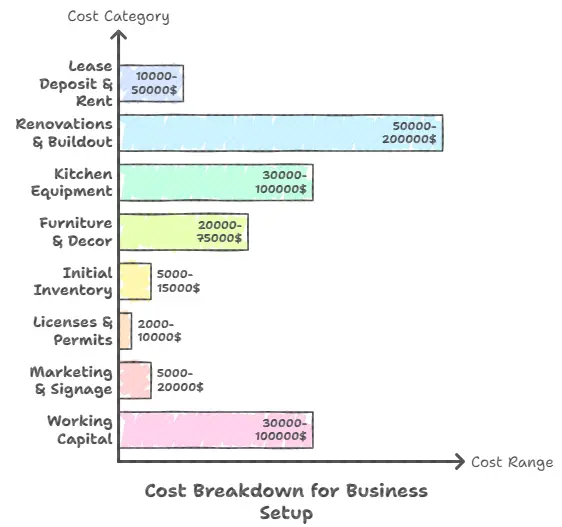
I always tell people to budget more than they think. Unexpected costs will pop up. They always do.
3.2 How to Get Funding
Here are the options I have seen people use successfully:
Personal Savings: This is the safest route. No debt, no pressure from investors. But it is risky if things go wrong.
Bank Loans: The traditional route. You need good credit, a solid business plan & often some collateral. Banks typically want to see 20 to 30% down payment from you.
Canada Small Business Financing Program: This is a government backed loan program that goes up to $1 million. It is a good option for new businesses.
Private Investors: Could be friends, family or angel investors. You give up some ownership but you also share the risk.
“Never open a restaurant with money you cannot afford to lose. I have seen too many people mortgage their homes & lose everything,” warns David Martinez, restaurant finance advisor.
4. Finding & Setting Up Your Location
I cannot stress this enough. Location can make or break your restaurant. Choose the wrong spot & even the best food will not save you.
4.1 Pick the Right Spot
From talking to successful restaurant owners, here is what you should look for:
- High foot traffic or easy parking availability
- Good visibility from the street
- The right neighborhood for your restaurant concept
- Nearby complementary businesses
- Public transit access
- Proper zoning for food service
In my research, I found that leasing is usually better than buying when you are just starting out. Look for 5 year leases with renewal options. Try to negotiate rent free periods for renovations.
Here is a tip I learned. Visit the location at different times of day. Morning, lunch, dinner, weekend. See how the traffic patterns change throughout the day & week.
4.2 Design Your Space
Your layout needs to work well for both your staff & your customers. The kitchen should typically be 35 to 40% of your total space.
I recommend working with a commercial kitchen designer. They know all the building codes & can actually save you money by designing efficient workflows.
Your front of house needs comfortable seating, clear paths for servers to move around, accessible washrooms, good lighting & proper ventilation.
If you are in Ontario, remember that AODA compliance (Accessibility for Ontarians with Disabilities Act) is required. Other provinces have similar accessibility rules you need to follow.
5. Equipment & Technology Systems
Now let me talk about equipment & technology. This is where smart investments really pay off.
5.1 Essential Equipment List
Here is what every restaurant kitchen needs as a minimum:
Kitchen Must Haves:
- Commercial refrigerator & freezer
- Cooking range with oven
- Prep tables made of stainless steel
- Food processor & mixer
- Pots, pans & utensils
- Storage containers & shelving units
Front of House Needs:
- Tables & chairs
- Plates, glasses & cutlery
- Menus & napkins
5.2 Technology That Matters
I have researched this extensively & talked to many restaurant owners. Investing in the right technology from day one will save you so much money & headaches later on.
A modern restaurant POS system is not optional anymore. It is absolutely essential for tracking sales, managing inventory & truly understanding your business numbers. Now, here I am elaborating why this matters so much.
When budgeting, include restaurant POS costs. Hardware usually costs $100–$500, plus monthly software fees. While it may seem expensive, the benefits outweigh the cost are real time sales data, automatic inventory tracking, staff management & detailed reports that support smarter business decisions..
One restaurant owner I spoke with told me that adding a QR code ordering system was a game changer for his business. It lets customers order & pay directly from their phones. This reduces wait times, cuts down on labor costs & actually improves the customer experience. Many successful restaurants are now implementing a comprehensive food ordering system that handles both dine in orders & takeout orders seamlessly through one platform.
The Foodship restaurant POS system is one option that helps you proactively manage orders & generate quick invoices. The Quick Key functionality makes creating invoices a breeze even during your busiest peak hours. Best of all, these features come standard with the system.
Despite the low cost of ownership, this kind of POS software remains scalable even on the day you decide to expand your business. It easily supports operations that help in managing inventory at all levels. The software caters to your exact needs through feedback from restaurant partners & owners alike.
This type of POS software presents the ideal choice for restaurant businesses that do not want to invest a huge amount on expensive server systems, but nonetheless wish to streamline their workflows & increase restaurant sales through better operations.
Technology Investment Summary:
- Restaurant POS system ($50 to $500 setup)
- Reservation software if you need it
- Inventory management tools
- Security cameras
- WiFi router for customers & operations
Here is my advice. Do not buy everything brand new. Mix new & used equipment smartly. Spend your money on technology that directly helps increase restaurant sales & improves your daily operations. Save money on things that customers never see.
6. Building Your Team
You simply cannot do this alone. You need good people working with you.
6.1 Who You Need to Hire
Based on what I have learned from restaurant owners, here is your basic team:
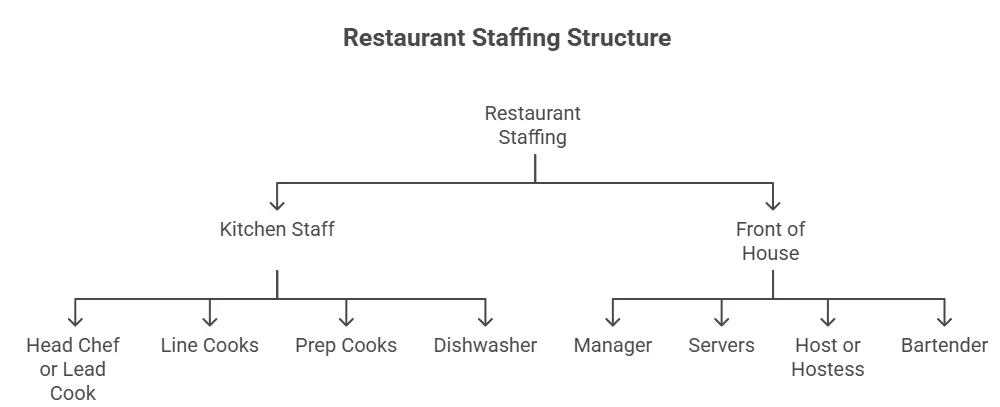
Small restaurants typically start with 5 to 10 people. You can always add more staff as your business grows.
6.2 Hiring Right
Write clear job descriptions. List the duties, required skills & the pay range upfront.
Here is where to find good staff:
- Indeed & other job posting sites
- Local culinary schools
- Restaurant job groups on Facebook
- Word of mouth recommendations
Always check references thoroughly. In the restaurant business, I have learned that attitude matters just as much as skill. You can train someone on skills but you cannot fix a bad attitude.
6.3 Train Your Team
Everyone on your team needs food safety training. In most provinces, this is actually required by law.
Beyond that basic requirement, you need to train your staff on your specific menu & ingredients, your customer service standards, how to use your POS system properly, opening & closing procedures & what to do in emergencies.
“Your staff IS your restaurant. Treat them well, pay them fairly & train them properly. They will make or break your success,” emphasizes Jennifer Wong, award winning restaurant owner.
7. Menu Development & Suppliers
Your menu is your main product. You need to get this right from the start.
7.1 Create Your Menu
My advice is to start small. Maybe 15 to 25 items total. Focus on doing those items really well instead of trying to offer everything.
You need to consider:
- Food costs should be 28 to 35% of your menu price
- How much preparation time each dish needs
- What skill level your cooks need
- What equipment is required
- Dietary restrictions like vegetarian, vegan & gluten free options
Price your items to make a profit but stay competitive with similar restaurants in your area.
7.2 Find Good Suppliers
You will need reliable suppliers for fresh produce, meat & seafood, dry goods & pantry items, beverages & paper products plus cleaning supplies.
Get quotes from multiple suppliers before choosing. Build strong relationships with them. Pay your bills on time & they will take care of you when you really need them.
From my research, local suppliers often give you better service & fresher products. National distributors might have better prices for some items though. Use both strategically.
8. Marketing & Pre Opening Strategy
Here is something important I learned. You need to start marketing before you even open your doors. Build excitement in advance.
8.1 Build Your Brand
Create a memorable name, logo & color scheme for your restaurant. Keep it simple & make sure it truly reflects your concept.
You absolutely need to set up a professional website, an Instagram account (this is a must have for restaurants nowadays), a Facebook page & a Google My Business listing.
Post content regularly. Share behind the scenes photos & videos. Show your renovation progress. Introduce your team members. Tease your menu items to build anticipation.
8.2 Do a Soft Opening
Before your grand opening, I strongly recommend doing a soft opening first. Invite friends, family & local food influencers. Serve a limited menu during this period.
This approach lets you test all your systems in real conditions, train your staff with actual customers, get valuable feedback & fix any problems before the general public comes in.
Offer good discounts during the soft opening period. Maybe 25 to 50% off the regular prices. People will understand you are still testing things out & they will be more forgiving of small mistakes.
8.3 Plan Grand Opening
Make your grand opening an actual event that people want to attend. Consider offering special promotions like free appetizers or discounts on meals, having live music or some entertainment, inviting local media for coverage, running social media promotions & partnering with local food bloggers who can spread the word.
9. Opening Day & Beyond
You are almost there. The finish line is in sight.
Create detailed checklists for your staff to follow. Opening duties should include unlocking & disarming the alarm, turning on all equipment, checking food storage temperatures, prepping ingredients for the day, setting up the dining room properly, counting cash & starting the registers & reviewing any reservations you have.
I will be honest with you. The first few weeks are going to be absolutely crazy. Expect problems to happen. The key is staying calm when they do.
Common issues during opening week include running out of popular menu items, slower than expected kitchen service, POS system glitches & various staffing problems. Have backup supplies ready & keep your cool under pressure.
9.1 First Month Focus
During your first month of operation, focus on collecting customer feedback through comment cards & monitoring online reviews closely. Track which menu items sell well & which ones do not. Monitor your food waste carefully. Watch your labor costs like a hawk. Be ready to adjust your menu if something is not working.
“The first year is survival mode. You will work 70 to 80 hour weeks. You will want to quit. Push through it. Year two gets much easier,” shares Michael Brown, who owns three successful Toronto restaurants.
9.2 Long-Term Success
Keep improving. Listen to customers, track trends & stay flexible. Build loyalty with consistent quality, great service, rewards, community involvement & social media. Watch your numbers closely. Know margins, control costs without cutting quality & adjust prices when needed.
10. Conclusion
Opening a restaurant in Canada is challenging but absolutely achievable with the right approach.
Here are the key takeaways I want you to remember:
- Plan thoroughly before you spend any money
- Get all your legal requirements done properly from the start
- Budget more than you think you will need
- Location matters enormously to your success
- Invest in proper technology systems that help your operations
- Hire good people & train them well
- Start your marketing efforts before you even open
Is it worth it? That really depends on you as a person. If you genuinely love food, enjoy working with people & are ready for extremely hard work, then owning a restaurant can be incredibly rewarding both personally & financially.
My final advice is to start small. Learn as you go along. Do not try to be perfect from day one. Just focus on being consistent & keep improving bit by bit every single day. Your restaurant dream can absolutely become reality. Just take it one step at a time.
11. Frequently Asked Questions
Q: How much money do I need to open a small restaurant in Canada?
A: For a 20–30 seat restaurant, expect $100,000–$250,000. This includes rent deposits, renovations, equipment, licenses, inventory & initial working capital. Keep an extra buffer for surprise costs.
Q: Do I need restaurant experience to open a restaurant in Canada?
A: No, it’s not legally required, but it helps a lot. Work in a restaurant, partner with an experienced operator, or at least complete food safety & basic business training.
Q: What licenses do I need to open a restaurant in Canada?
A: A business license, food service permit, food handler certification & possibly a liquor license. You may also need sign permits, SOCAN music license & fire approval. Requirements vary by city & province.